June 22, 20265 min read
French Press vs Pour-Over: Which to Start With
Deciding between French press and pour-over for your first brewer? Compare cost, effort, forgiveness, and taste to pick the right one to start with.

Start with a French press. If you are buying your first home brewer and you want good coffee without learning a pouring technique, the French press is the more forgiving choice: coarse grounds, hot water, a four-minute wait, and a slow press. Pour-over makes a cleaner, brighter cup and teaches you more about brewing, but it asks for a steadier pour and usually a gooseneck kettle and a scale to shine. Pick the press to get coffee in the cup this week. Pick pour-over if you already enjoy fiddling and want to chase clarity.
The real difference between them is the filter, and everything else follows from that. A French press uses a metal mesh plunger, so the natural oils and a small amount of fine particles pass straight into the cup. That gives you a heavier, rounder body. A pour-over runs the water through a paper filter that traps most of those oils and fines, so the cup reads cleaner and the acidity and aromatics come through sharper. Neither is better in the abstract. One tastes like a comforting mug, the other tastes like a bright glass of coffee, and which you prefer is the whole question.
Effort is where most beginners actually decide. The French press is full immersion, which means the grounds soak in the water the entire time and the brew mostly takes care of itself. You weigh or eyeball your coffee, pour water just off the boil, stir once, set a timer for about four minutes, and press. The timing is loose enough that thirty seconds either way will not ruin it. Pour-over is a different rhythm. You wet the grounds first to let them release gas, a step called the bloom, then pour in slow circles so the water meets the bed evenly. Pour too fast or all in one spot and the water races through and the cup comes out thin. That control is learnable in a couple of weeks, but it is a skill, not a one-time setup.
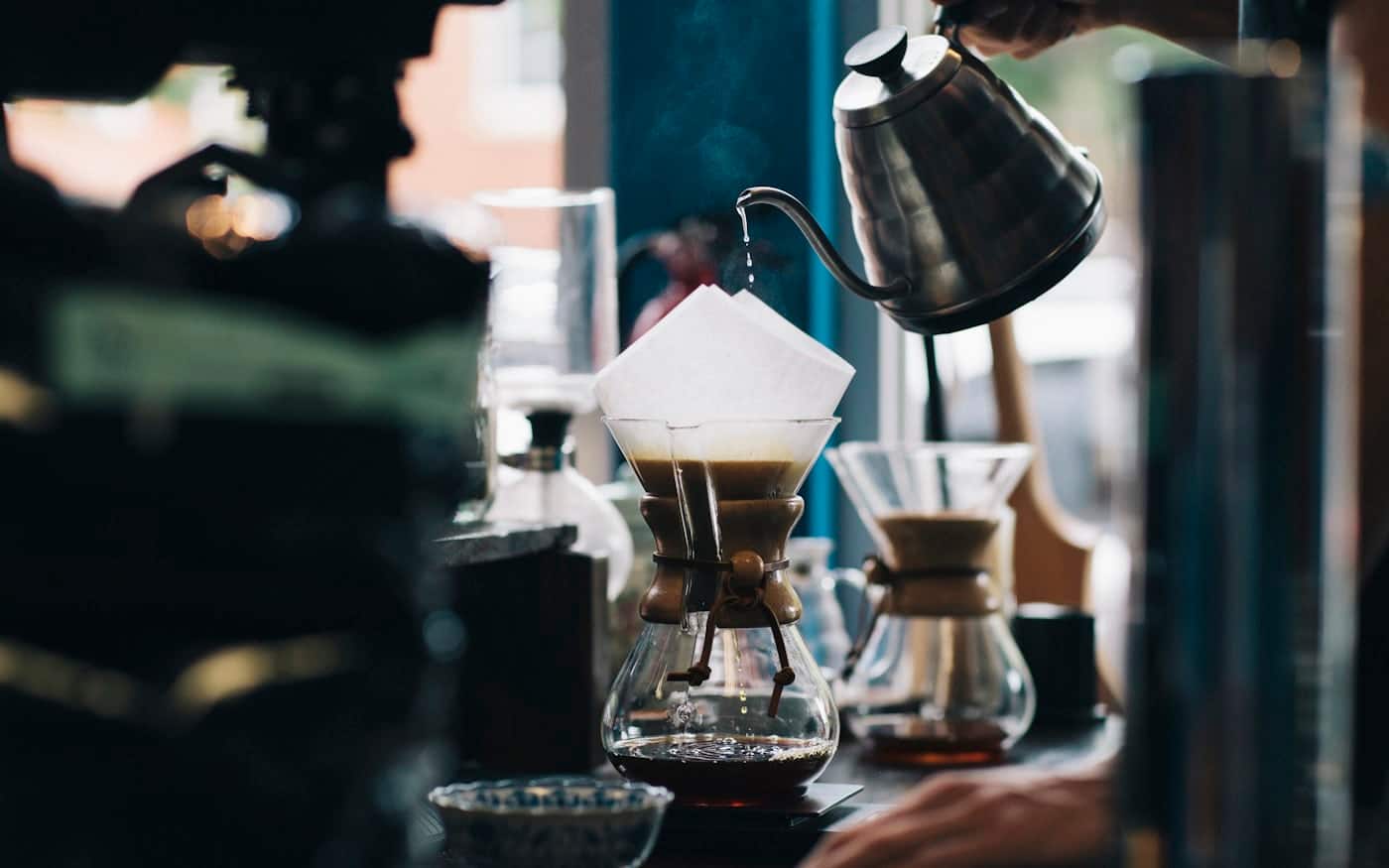
Cost is closer than people assume. A French press is one object: the carafe is the brewer, the filter is built in, and you never buy paper. A basic pour-over dripper is cheap on its own, often cheaper than a press, but it leans on two supporting tools to do its best work. A gooseneck kettle gives you the slow, aimed pour that pour-over depends on, and a scale with a timer keeps your ratio and pace honest while you are learning. You can brew pour-over without either, but the results get unpredictable. So the single purchase is cheaper for pour-over, and the full kit is usually cheaper for the press.
One thing carries equal weight no matter which you choose: the grind. The press wants a coarse, even grind so the mesh does not let through a slurry of powder, and pour-over wants a medium grind that drains at a steady pace. A blade grinder produces a scatter of sizes that hurts both methods, which is why a burr grinder under $100 does more for your cup than upgrading the brewer ever will. If you only have the budget for one thing this month, buy the grinder, then pick the brewer. Our grind size chart gives you the coarse and medium starting points for each method so you are not guessing on day one.
Here is how to actually decide. Start with the French press if you want a warm, full-bodied cup, you make coffee for one or two people, and you do not want a learning curve before your first good brew. Its main downside is that the cup can read a touch muddy at the bottom and the mesh needs a thorough rinse so old oils do not turn rancid. Start with pour-over if you like the ritual, you are drawn to bright and clean flavors, and you do not mind buying a kettle and a scale to get there. Its downside is that a rushed pour gives you a weak cup, so it punishes a distracted morning more than the press does. Many people end up owning both within a year, and that is fine; the press becomes the weekday default and pour-over becomes the slow weekend one.
Whichever you start with, the path forward is the same: nail your ratio before you chase anything fancy. A good place to begin is around 1 gram of coffee for every 16 grams of water, then adjust to taste, and our coffee-to-water ratio guide walks through how to scale it up or down. If you want to see where these two sit among every common method ranked by effort, our overview of home coffee brewing methods lays out the whole field, and our deeper look at the V60, Chemex, and French press head to head is the next read once you have settled on a starting brewer.
Good gear only matters if the beans are good, and that is the easy part in Brooklyn. Pick up a fresh bag from a roaster like Devoción in Williamsburg or Sey Coffee in Bushwick, grind it just before you brew, and either method will reward you. If you would rather taste the difference in person before you commit, sit down at one of the borough's specialty coffee shops and order the same single origin as both a pour-over and a press style cup. Whichever one makes you want a second cup is the one to start with at home.
Frequently asked
- Is French press or pour-over easier for a beginner?
- French press is easier to start with. You add coarse grounds, pour hot water, wait about four minutes, and press. There is no pouring technique to learn and the timing is forgiving. Pour-over rewards a steadier hand and a slower pour, which is a skill you build over a few weeks.
- Does French press or pour-over make stronger coffee?
- French press tends to taste fuller and heavier because its metal mesh lets the natural oils and fine particles through into the cup. Pour-over runs through a paper filter that traps most of the oils and fines, so the cup reads cleaner and lighter. Neither is stronger by default; strength comes from your coffee-to-water ratio.
- Which is cheaper to start, French press or pour-over?
- A French press is usually the cheaper single purchase because the carafe is the whole brewer. A basic pour-over dripper costs about the same or less on its own, but it leans harder on a gooseneck kettle and a scale to get good results, so the full pour-over kit often costs more.
- Do I need a special kettle for either one?
- For French press, no. Any kettle that boils water works because you pour straight into the carafe. For pour-over, a gooseneck kettle helps a lot because the narrow spout lets you pour slowly and evenly over the grounds, which is most of what separates a good pour-over from a watery one.
Worth a visit
Coffee shops that fit this story.