June 19, 20264 min read
Coffee-to-Water Ratio Guide: How Much Coffee Per Cup
Find the right coffee-to-water ratio by brew method. Start at 1:16, weigh in grams, and use the golden ratio to fix weak or bitter coffee at home.

Start at a 1:16 ratio: 1 gram of coffee for every 16 grams of water. That single number fixes most weak or harsh home coffee, and it sits right next to the Specialty Coffee Association golden cup target, which centers on roughly 1:18 with a tolerance band on either side. Weigh both the coffee and the water in grams, taste, then nudge: more water for a lighter cup, less for a stronger one. The brew ratio is the one variable that changes your cup the most for the least effort.
Ratio just means the weight of dry coffee compared to the weight of water. Written 1:16, it reads as one part coffee to sixteen parts water, so 20 grams of coffee calls for 320 grams of water. The reason the community settled on a band rather than a single perfect number is that the SCA golden cup targets a finished strength most palates read as balanced, and that strength lands across a small range instead of one exact point. A lower number like 1:15 packs more coffee into the same water and tastes bolder and heavier. A higher number like 1:18 thins it out toward tea-like and bright. Neither is wrong; they are dials, and you own the dial.
Here is the part most home setups get wrong: they measure by volume, not weight. A "scoop" or "two tablespoons per cup" swings by several grams depending on grind size, roast level, and how packed the spoon is. Light roasts are denser than dark, so the same scoop holds more coffee by weight. Weigh both sides in grams on a kitchen or brew scale and the guesswork disappears. This is exactly why a coffee scale with a built-in timer is the highest-leverage upgrade after a grinder. You can confirm the math on any setup with a simple piece of gear that reads to a tenth of a gram.
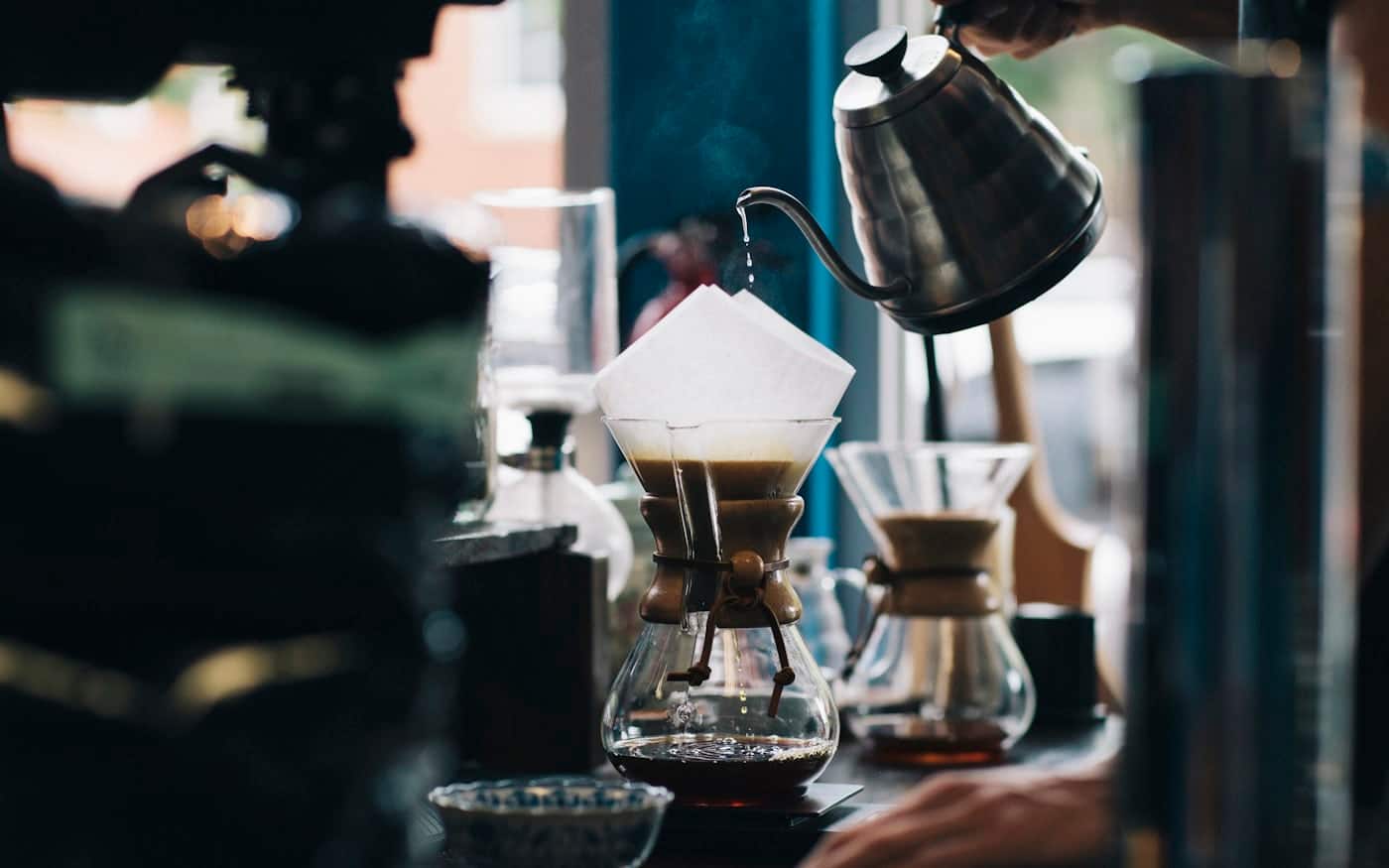
The ratio band shifts a little by brewing method, mostly because of how long the water and coffee stay in contact and how much water the grounds soak up. For pour-over, start at 1:16 and move toward 1:17 if you want more clarity; a typical V60 brew is 20 grams of coffee to 320 grams of water. The grind size chart by method pairs with this, because ratio and grind work together: too coarse a grind at a strong ratio still brews weak, since the water cannot pull enough out of the coffee in time. For the pouring sequence that turns a ratio into a clean cup, the guide to dialing in pour-over walks through bloom, pour count, and timing.
French press runs a touch stronger and chunkier. Start around 1:15, so roughly 30 grams of coffee to 450 grams of water, with a coarse grind and a four-minute steep. The metal mesh lets oils and fine particles through, which is why the same beans taste fuller in a press than in a paper-filtered pour-over. If you are choosing between brewers, the V60 vs Chemex vs French press comparison shows how each one treats the same ratio differently, and the French press buyer's guide covers glass versus stainless for the brewer itself.
Espresso and cold brew sit at the two extremes and explain why one ratio cannot cover everything. Espresso is intensely concentrated: a common modern recipe is about 1:2, meaning 18 grams of ground coffee pulling roughly 36 grams of liquid espresso in 25 to 30 seconds under pressure. Cold brew goes the other way, brewed strong as a concentrate at around 1:8, steeped for 12 to 24 hours, then diluted with water or milk to taste before you drink it. Both still obey the same logic of strength, contact time, and dilution; they just live at different ends of the scale than the everyday 1:16.
Use the ratio as a diagnostic, not a rule to obey blindly. Weak, watery, sour coffee usually means too little coffee or too much water, so drop toward 1:15. Heavy, harsh, drying coffee often means the opposite, so move toward 1:17 or 1:18, or coarsen the grind. Change one variable at a time and taste between changes; if you move ratio and grind and water temperature all at once, you learn nothing about which one fixed the cup. Many Brooklyn roasters print a recommended starting ratio right on the bag, and a shop like Sey Coffee in Bushwick roasts deliberately light, which tends to taste best on the brighter, slightly higher-ratio end of the band.
Once the ratio is locked, the rest of brewing falls into place. For the full picture of grind, water, dose, and method working together, the brewing fundamentals handbook is the place to go deep, and if you are assembling your first kit, the beginner pour-over set guide pairs a dripper, scale, and kettle so the ratio is easy to hit. When you want to taste what a dialed ratio is supposed to land like, sit at a specialty coffee bar and notice how balanced a properly weighed cup tastes, then chase that at home.
Frequently asked
- What is the best coffee-to-water ratio?
- A 1:16 ratio is the most reliable starting point: 1 gram of coffee for every 16 grams of water. That sits near the Specialty Coffee Association golden cup target, which centers on roughly 1:18 with a tolerance band on either side. Go to 1:17 or 1:18 for a lighter cup, 1:15 for a stronger one.
- How much coffee do I use per cup?
- For a single 250 gram cup at 1:16, use about 15 to 16 grams of coffee. The old "two tablespoons per cup" rule is unreliable because grind and bean density change the weight per scoop, which is why weighing in grams beats scooping.
- Does the ratio change by brew method?
- The ratio band stays close to 1:15 to 1:17 across most methods. French press lands around 1:15, pour-over around 1:16 to 1:17, and espresso runs far more concentrated at about 1:2. Cold brew is the outlier, brewed strong at 1:8 or so and diluted before drinking.
- Should I weigh coffee and water or just measure by volume?
- Weigh both in grams. Volume scoops swing with grind size and roast, so the same scoop can vary by several grams. A scale removes that variable and makes a good cup repeatable.
Worth a visit
Coffee shops that fit this story.