June 19, 20265 min read
Coffee Brewing Basics: A Beginner Handbook
Learn the four coffee brewing basics that decide every cup: grind size, ratio, water, and time. A beginner handbook from Brooklyn Coffee Shops.

Good coffee at home comes down to four variables: grind size, the coffee-to-water ratio, the water itself, and brew time. Get those four into range and almost any method makes a cup worth drinking. Get one of them wrong and the best beans in Brooklyn will still taste off. This handbook walks through each fundamental in plain terms, tells you the numbers that matter, and points you to the deeper guide for whichever one you want to master next.
Start with grind size, because it is the variable most home brewers get wrong and the one that changes the cup the most. Grind controls surface area, and surface area controls how fast water pulls flavor out of the coffee. Grind too fine for your method and water moves through slowly, pulling out the harsh, bitter compounds that come late. Grind too coarse and water rushes through before it picks up the sweetness, leaving a thin, sour cup. Each brewer wants its own range: coarse and chunky for a French press, medium for drip, medium-fine for pour-over, and fine for espresso. The full breakdown lives in our coffee grind size chart by method, which matches each brewer to a setting you can dial in.
Grind consistency matters as much as the setting. A burr grinder crushes beans between two surfaces set a fixed distance apart, so the particles come out close to the same size. A blade grinder chops at random and produces a mix of boulders and dust. Those tiny dust particles, the fines, over-extract and turn bitter while the boulders stay under-extracted and sour, so a single cup tastes muddled. If you upgrade one piece of gear first, make it the grinder. Our guide to the best home coffee grinder explains why and which models earn the counter space.
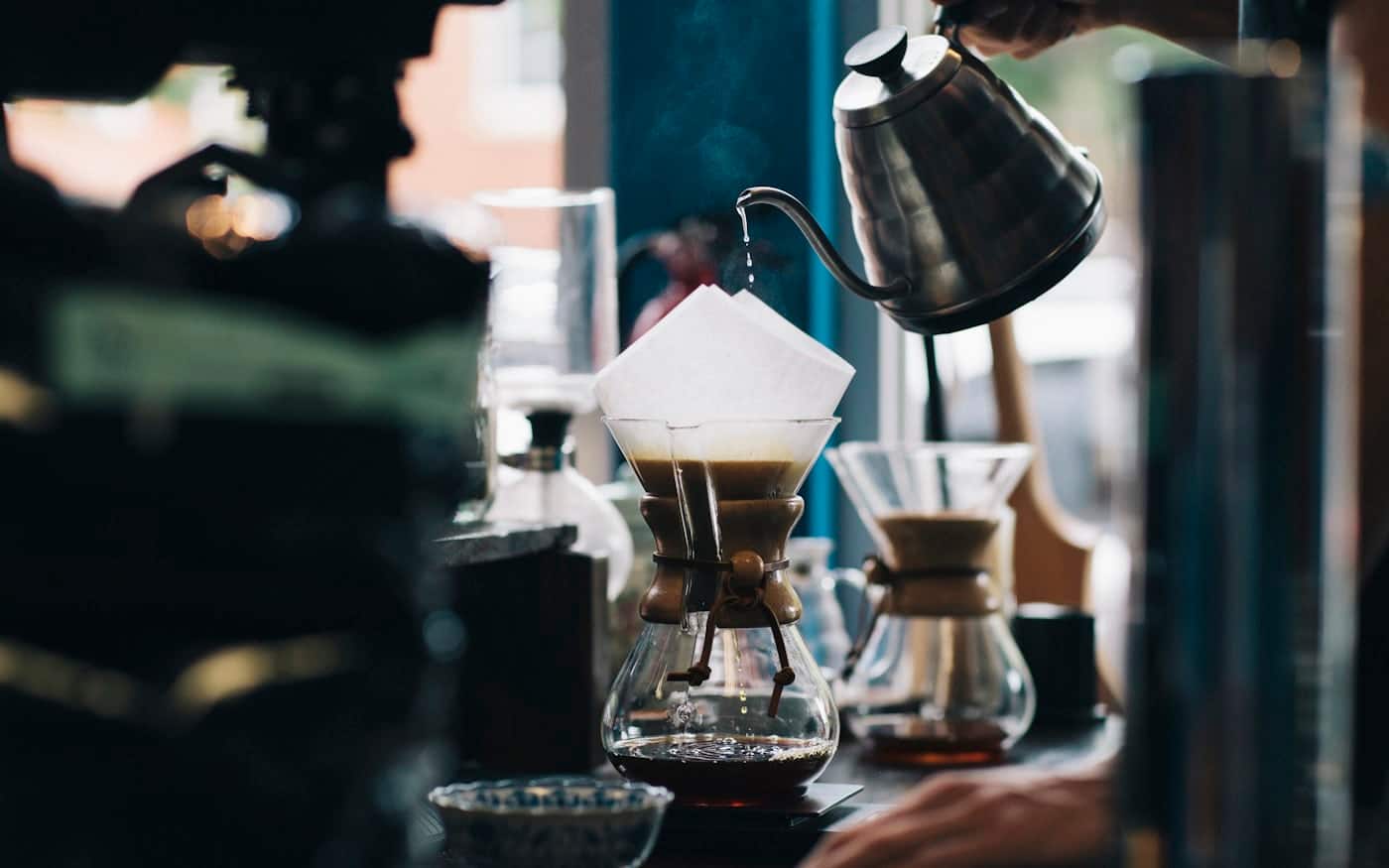
The second fundamental is the ratio, the weight of coffee against the weight of water. This is where a scale earns its keep, because measuring by scoops drifts from cup to cup and you can never repeat a result you liked. The Specialty Coffee Association brewing standard centers on roughly 55 grams of coffee per liter of water, which works out close to 1 gram of coffee to 18 grams of water. Most home brewers settle somewhere between 1:15 and 1:17 and nudge from there: tighter toward 1:15 for a stronger cup, wider toward 1:17 for a lighter one. The number is a starting point, not a rule. Once you weigh your coffee, you stop guessing and start adjusting on purpose. Our coffee-to-water ratio guide breaks the math down by brew method, and the brew ratio glossary entry keeps the definition handy.
Third is the water, and it is the variable people skip because it feels like it should not matter. It does. A finished cup of coffee is more than 98 percent water, so whatever is in your tap is in your cup. Temperature comes first: the Specialty Coffee Association brewing control chart calls for water between 195 and 205 degrees Fahrenheit, which is water just off a rolling boil. Cooler water under-extracts and tastes sour and flat; boiling water scorches and tastes harsh. Mineral content matters too, since coffee needs some dissolved minerals to carry flavor but not so many that the cup tastes chalky or dull. If your tap water tastes good on its own, it usually makes good coffee. Our deeper piece on water for coffee covers temperature and mineral balance, and the TDS glossary entry explains how brewers measure what ends up dissolved in the cup.
The fourth fundamental is time, and it ties the first three together. Brew time is just how long water and coffee stay in contact, and the right window depends on the method. A French press steeps for about four minutes. A pour-over usually runs somewhere around three minutes from first pour to last drip. Espresso pulls in roughly 25 to 30 seconds. These windows exist because the right grind size and ratio only land in balance at the right contact time. If your pour-over finishes in 90 seconds, the grind is too coarse; if it stalls past four minutes, it is too fine. Time is the feedback loop that tells you whether the other three variables are dialed in, which is why a brew that drains too fast or too slow is the first thing to check when a cup tastes wrong.
These four variables also explain the single most common complaint about home coffee, which is that it tastes too bitter or too sour. Bitter usually means over-extraction: the grind is too fine, the water too hot, or the brew too long. Sour usually means the opposite: too coarse, too cool, or too fast. You diagnose the problem by changing one variable at a time and tasting again, never two at once, or you will not know which change fixed it. Our walkthrough on why your coffee tastes bitter or sour turns those symptoms into a short checklist you can run in the morning.
Once the four variables make sense, the method is mostly a question of how much control you want. A French press is forgiving and needs no special pour. Pour-over rewards a steady hand and a bloom, the 30-second pause after the first splash of water that lets fresh coffee release its trapped carbon dioxide before the real pour begins. If you want to taste the difference control makes, our guide to dialing in pour-over is the step-by-step, and the head-to-head on V60 vs Chemex vs French press helps you pick a first brewer. For a wider tour of every method ranked by effort, start with our overview of home coffee brewing methods.
Last is the bean, because no amount of technique rescues stale coffee. Buy whole beans, grind right before you brew, and use them within a few weeks of the roast date. Keeping them fresh has its own short set of rules, which we cover in how to store coffee beans. In Brooklyn the easiest path to fresh beans is to buy them where they are roasted. The specialty coffee shops across the borough roast and sell their own, from Sey Coffee in Bushwick to Devocion in Williamsburg, and most will grind to order if you tell them how you brew. Master the four variables, buy fresh, and the gap between a Brooklyn cafe pour and your kitchen counter gets very small.
Frequently asked
- What are the most important coffee brewing variables?
- Four variables decide most of the cup: grind size, the coffee-to-water ratio, water temperature and mineral content, and brew time. Get those four in range and almost any method makes good coffee.
- What is the standard coffee-to-water ratio?
- The Specialty Coffee Association brewing standard centers on roughly 55 grams of coffee per liter of water, which works out close to 1 gram of coffee to 18 grams of water. Most home brewers land between 1:15 and 1:17 and adjust to taste.
- Does grind size really matter that much?
- Yes. Grind size controls how fast water pulls flavor from the coffee. Too fine for the method tastes bitter and harsh; too coarse tastes thin and sour. Each brewer wants a specific range, from coarse for French press to fine for espresso.
- What water temperature should I brew with?
- The Specialty Coffee Association brewing control chart calls for water between 195 and 205 degrees Fahrenheit, which is water just off a boil. Cooler water tends to taste sour and flat.
Worth a visit
Coffee shops that fit this story.