June 19, 20265 min read
Best Water Temperature for Coffee (and Why It Matters)
Brew between 195 and 205 degrees Fahrenheit and use clean, lightly mineral water. How temperature, TDS, and tap vs filtered water shape every cup.

Brew coffee with water between 195 and 205 degrees Fahrenheit, roughly 90 to 96 degrees Celsius, which is water about 30 seconds off a rolling boil. Use water that is clean and lightly mineral, not distilled and not very hard. Those two choices, temperature and mineral content, do more for the cup than most people expect, because a finished coffee is more than 98 percent water. Whatever is in your tap ends up in your mug.
Temperature is the easier of the two to fix, so start there. The Specialty Coffee Association brewing standard puts the target window at 195 to 205 degrees Fahrenheit. Hot water pulls flavor out of ground coffee faster than cool water, so temperature is really a control on how much coffee dissolves. Brew too cool, under about 195 degrees, and the water leaves the sweetness behind and pulls mostly the bright, sour acids first, so the cup tastes thin and sharp. Push to a full boil and you can scorch the grounds and drag out bitter compounds, which reads as harsh. The practical move at home is to boil the kettle, take it off the heat, and wait about half a minute before you pour. That single pause lands most kitchens inside the window without a thermometer.
The reason the window matters at all is the same idea that governs every brew variable: how much coffee ends up dissolved in the water. Hotter water dissolves more, cooler water dissolves less, and the goal is a cup that has pulled the sweet and the bright without dragging in the bitter. Brewers measure how much dissolved by reading the TDS of the finished cup, and they tune the result with the brew ratio, grind size, and temperature together. Temperature is the lever you can change in seconds, which is why it is the first thing to check when a cup tastes off.
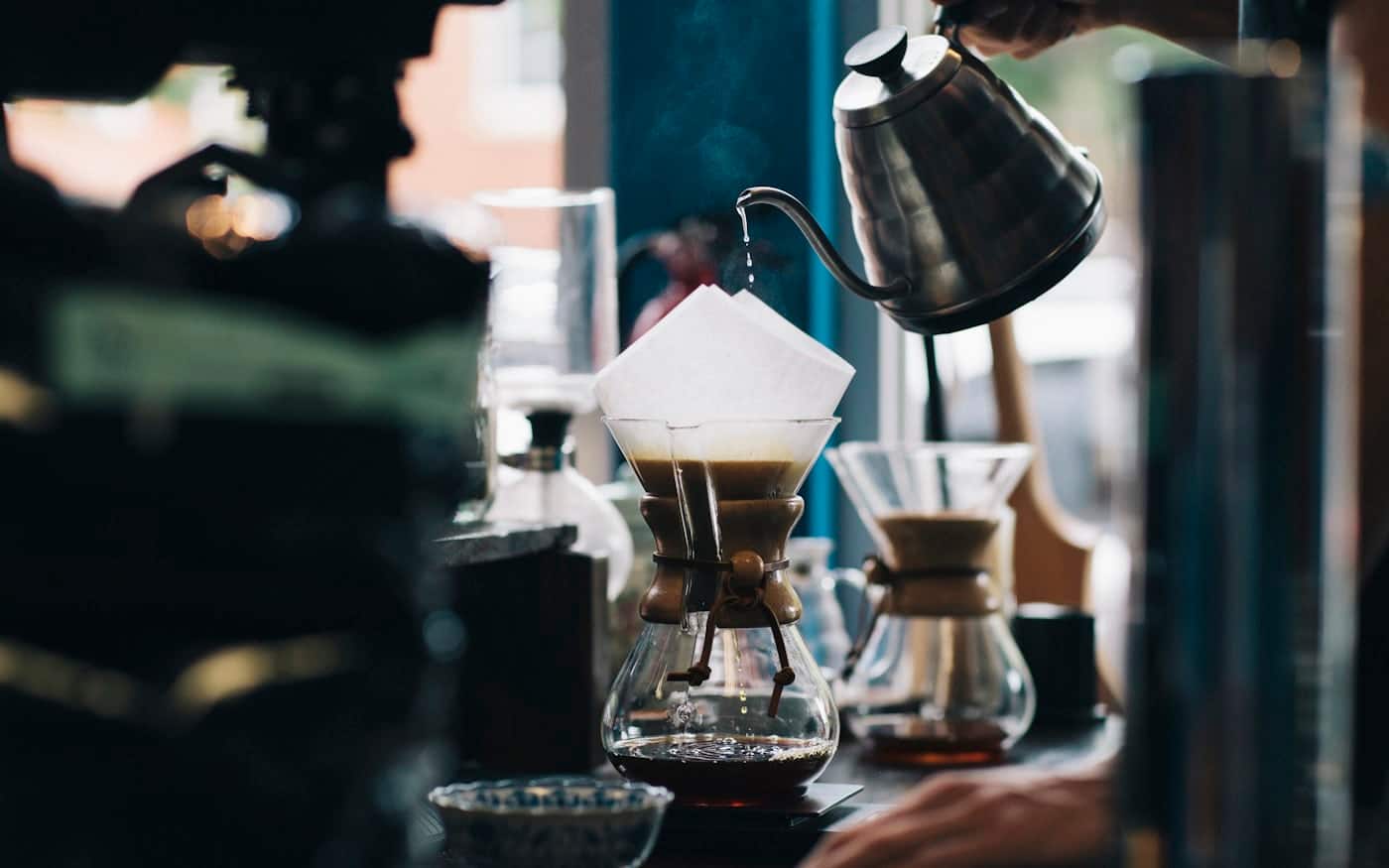
Now the harder part, which people skip because it feels like it should not matter: the water itself. A cup of coffee is mostly water, so the water is not a neutral background, it is the main ingredient. Pure water, the distilled or reverse-osmosis kind with nothing added, actually makes flat, hollow coffee, because it carries no minerals to bind and present the flavor compounds. At the other end, very hard water, loaded with calcium and magnesium, tastes chalky and dull and scales up your kettle and machine over time. The sweet spot sits in between: water with a moderate amount of dissolved mineral content, soft enough not to taste hard but mineral enough to carry flavor. The Specialty Coffee Association has published target ranges for brewing water for exactly this reason, and the short version is that some minerals help and too many hurt.
For most home brewers the honest answer is simpler than the chemistry sounds: if your tap water tastes good straight from the glass, it usually makes good coffee. The most common problem in a city kitchen is chlorine, which is added to municipal water for safety and shows up as a faint pool smell or a chemical edge in the cup. A basic activated-carbon filter pitcher pulls most of that out and is the cheapest upgrade you can make. If your water is genuinely very hard, a filter helps with taste and protects your gear, though it will not fully soften the water. What you do not want to do is reach for a jug of distilled water and expect better coffee, because stripping the minerals out swings you to the flat end of the scale. Filtered tap water beats distilled water for taste almost every time.
A word on Brooklyn tap, since this is a Brooklyn guide. New York City water comes mostly from upstate reservoirs and is on the softer side, with modest mineral content, which is part of why coffee and bagels here have a reputation. It is good brewing water as it comes, with one caveat: it is chlorinated like any municipal supply, so a carbon filter still earns its keep for flavor. If you have been blaming your beans or your technique for a faint chemical note, run your water through a filter pitcher for a week and taste again before you change anything else. It is the rare coffee fix that costs almost nothing.
Temperature and water quality work together, and they are also where your gear choices start to pay off. A pour-over especially is sensitive to temperature because the water touches the grounds for only a couple of minutes, so it has to arrive in the right window and stay there. That is the case for a variable-temperature kettle that holds a set number rather than guessing off a stovetop boil. If you are weighing whether that upgrade is worth it, our guide to the best electric gooseneck kettle for pour-over walks through which models hold temperature and pour control well, and you can see the kettle we keep on the counter on the gear page. For a French press or drip machine the exact number matters less, because the longer contact time is more forgiving. Once the water is dialed, the pour is the next variable; our guide to dialing in pour-over walks through grind, bloom, and pace.
Think of water as the first of the brewing fundamentals, not an afterthought. Once temperature is in range and your water tastes clean, the other variables, grind, ratio, and time, have a fair chance to land. Our brewing fundamentals handbook puts all four in one place, and the head-to-head on V60 vs Chemex vs French press shows how each brewer responds to the same water. When you want to compare your kitchen pour against a proper one, the pour-over bars among Brooklyn's specialty coffee shops are the benchmark. The baristas at a place like Sey Coffee in Bushwick control water temperature down to the degree, which is a large part of why the cup tastes the way it does. Match the temperature and clean up the water at home, and you close most of the gap. For a wider tour of methods ranked by effort, start with our overview of home coffee brewing methods.
Frequently asked
- What is the best water temperature for brewing coffee?
- The Specialty Coffee Association brewing standard calls for water between 195 and 205 degrees Fahrenheit, roughly 90 to 96 degrees Celsius. That is water just off a rolling boil. Cooler water tends to taste sour and flat; water at a full boil can scorch the grounds and taste harsh.
- Does the water you use actually change how coffee tastes?
- Yes. A finished cup is more than 98 percent water, so whatever is dissolved in your tap is in your cup. Water that is too pure tastes flat because it carries little flavor, while very hard water tastes chalky and dull. A small amount of dissolved mineral content does the carrying.
- Should I use tap or filtered water for coffee?
- If your tap water tastes clean on its own, it usually makes good coffee. If it tastes of chlorine or is very hard, a simple carbon filter pitcher helps. Distilled or reverse-osmosis water with nothing added tends to taste flat and is not the upgrade people expect.
- What does TDS mean for coffee water?
- TDS stands for total dissolved solids, the count of minerals and other matter dissolved in water, measured in parts per million. Brewing water in a moderate range carries flavor without tasting hard. The same idea measured in the finished cup tells you how much coffee actually dissolved.
Worth a visit
Coffee shops that fit this story.