4 min read
Do You Really Need a Gooseneck Kettle?
An honest yes or no by brew method. You need a gooseneck for pour-over, but not for French press, drip machine, Moka pot, or AeroPress.

You need a gooseneck kettle for one thing: pour-over. If you brew with a pour-over cone, the narrow spout is the difference between a slow, aimed stream and a wide gush that channels through the grounds and thins the cup. For every other method, French press, a drip machine, a Moka pot, or an AeroPress, the spout shape does not touch the cup, so any kettle you already own is fine. The honest answer is a yes for one method and a no for the rest, and the rest of this page sorts which camp you are in.
Start with why the spout matters at all. Pour-over is the one brew method where your hand controls the water, second by second, across the whole brew. A narrow gooseneck lets you wet the bed evenly during the bloom and keep a thin, steady flow after, which keeps the grounds extracting at the same rate. A wide kitchen kettle sends a fast, wide stream that carves a channel straight through the bed, so some grounds over-extract and others barely get wet. That uneven pull is the usual reason a home pour-over tastes thin or sour. So for pour-over the kettle is not a luxury, it is the tool that makes the method work.
Now the methods where you can skip it. French press is the clearest no. You add hot water all at once, stir, wait about four minutes, and press, so the grounds steep evenly no matter how the water goes in. The spout changes nothing. Our French press vs pour-over breakdown walks through why the two methods reward completely different gear. A drip machine is also a no, because the machine showers the water for you and you never touch a kettle. The same logic clears a Moka pot, which builds its own pressure on the stove, and an AeroPress, where you steep and press through a small chamber rather than aim a pour. For all four, your stovetop kettle or even a pot of water does the job.
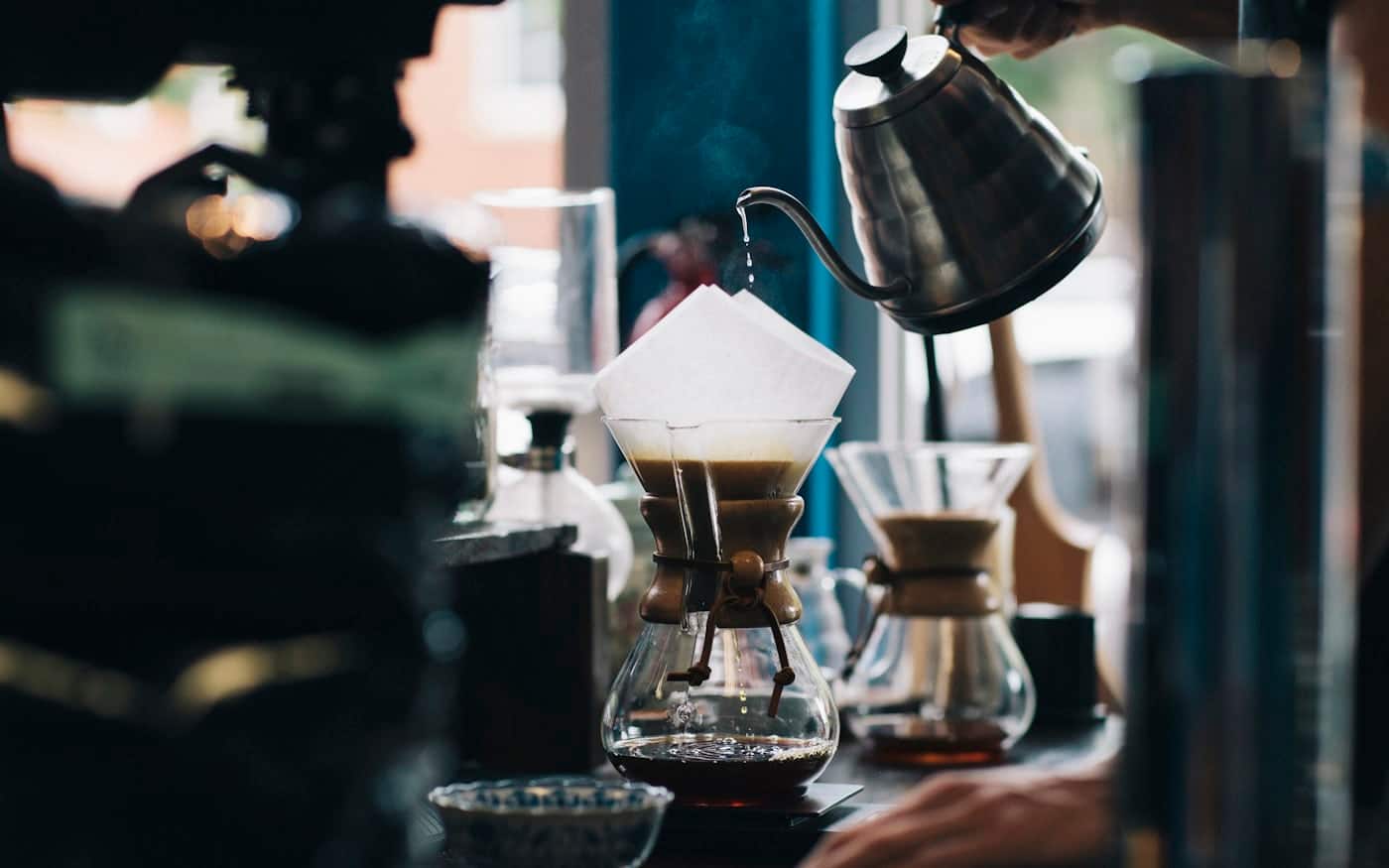
What about making pour-over without a gooseneck? It can be done, and it is worth knowing the workaround before you spend anything. The trick is to slow the water down some other way: pour from a small measuring cup, a narrow-necked jug, or even a clean squeeze bottle, anything that turns a flood into a trickle you can aim. The pour will be clumsier than a real gooseneck and you will fight channeling, but for an occasional weekend cup it is a reasonable bridge. If pour-over becomes your daily ritual, the gooseneck stops being optional, because fighting the pour every morning gets old faster than the kettle costs. Our V60 vs Chemex vs French press comparison covers which dripper to pair the kettle with once you commit.
There is a second feature people lump in with the gooseneck and should not: temperature control. The spout shape and a variable-temperature base are two separate upgrades. The spout helps every pour-over, full stop. A variable-temperature base, which lets you set a number and hold it instead of chasing a boil as it cools, is a convenience that matters most if you brew most mornings and want repeatable results. Most pour-over lands between 195 and 205 degrees Fahrenheit, and holding your chosen number beats hitting any single one. The reasons behind that window, and how water minerals change the cup, live in our water-for-coffee guide. If you brew occasionally, a plain gooseneck with no readout is enough; if you brew daily, the set-and-hold feature earns its keep.
So who should actually buy one? Buy a gooseneck if pour-over is your main method, or the method you want to learn well. Skip it, for now, if you live in a French press, a drip machine, or a Moka pot, and put that money toward beans or a burr grinder instead, since grind evenness and bean freshness move the cup more than the kettle does for those methods. If you do decide pour-over is the path and you want to know exactly which kettle to buy, with a top pick, a best-for-most, and a budget option, our best gooseneck kettle guide is the one to read next. This page settles whether you need one; that page settles which one.
One last thing the kettle cannot do on its own: nail the ratio. A perfect pour over stale beans or a guessed dose still tastes flat, so the kettle is the third lever, not the first. Our coffee-to-water ratio guide gives you a starting point to weigh against, and from there the gooseneck is what lets you pour that ratio in evenly. Control the water, weigh the coffee, and grind fresh, and the pour-over rewards all three at once.
For Brooklyn context, the best way to decide if pour-over is worth the kettle is to taste a clean one first. Specialty roasters like Sey Coffee in Bushwick roast light, expressive coffees that show off what a careful pour can do, and the specialty coffee shops lane is the short list of Brooklyn rooms that pour pour-over well. Order one, watch the barista work the kettle, and you will know within a cup whether the method, and the gooseneck it needs, belongs on your counter.
Frequently asked
- Do you really need a gooseneck kettle?
- Only for pour-over. The narrow gooseneck spout gives you a slow, aimed stream so you can wet the grounds evenly and control flow. If you brew with a French press, drip machine, Moka pot, or AeroPress, the spout shape does not change the cup, so any kettle is fine.
- Can you make pour-over without a gooseneck kettle?
- You can, but it is harder. A wide kitchen kettle dumps water too fast and tends to channel straight through the bed, which pulls unevenly and thins the cup. You can slow it down by pouring through a measuring cup or a small jug, but a gooseneck makes a steady, aimed pour far easier.
- Is a gooseneck kettle worth it for French press?
- No. French press steeps the grounds in water for several minutes, so how you pour barely matters. You add water, stir, wait, and press. Save the money for better beans or a burr grinder, which both change a French press cup far more than the kettle does.
- Do you need a variable-temperature gooseneck or just the spout?
- The spout is what makes a kettle a gooseneck and the part that controls your pour. A variable-temperature base is a separate upgrade that lets you hold a set number rather than chasing a boil. The spout helps every pour-over; the temperature control matters most if you brew most mornings.