June 19, 20265 min read
Coffee Grind Size Chart by Brewing Method
Compare grind size by method: extra coarse for cold brew, coarse for French press, medium for drip, fine for espresso. A practical reference chart.

Grind size runs from extra coarse to extra fine, and the right setting is set by your brewing method, not by preference. Extra coarse (like peppercorns) is for cold brew. Coarse (like sea salt) is for French press. Medium coarse suits a Chemex, medium (like table salt) suits drip and a flat-bottom dripper, medium fine suits a V60, fine (like powdered sugar) is for espresso and a Moka pot, and extra fine is for Turkish coffee. The rule behind the chart is simple: the shorter the water sits on the grounds, the finer you grind.
That rule comes from contact time. Brewing is the act of dissolving flavor out of ground coffee, and how much you dissolve depends on how long water touches the grounds and how much surface area those grounds expose. Grind finer and you create more surface area, so flavor pulls out faster. A method that soaks the coffee for minutes needs coarse grounds to avoid pulling too much; a method that flashes water through in seconds needs fine grounds to pull enough. Get the pairing wrong and the cup tells you: thin and sour means the water moved too fast for the grind, harsh and bitter means it sat too long. If you want the full mechanics behind that, our brewing fundamentals handbook walks through the same idea across every variable.
Start at the coarse end. Cold brew uses the coarsest grind of any common method, roughly the size of cracked peppercorns, because the grounds sit in cold water for twelve to twenty-four hours. At that length of contact, anything finer would over-extract into something muddy and bitter, and the long steep already does the work that heat does in a hot brew. The French press sits one step finer at a coarse, sea-salt texture. Its steep is far shorter, around four minutes, but its metal mesh filter lets fine particles slip into the cup, so a coarse grind keeps the brew clean rather than sludgy and helps you avoid the over-extraction that a fine grind would cause over those four minutes.
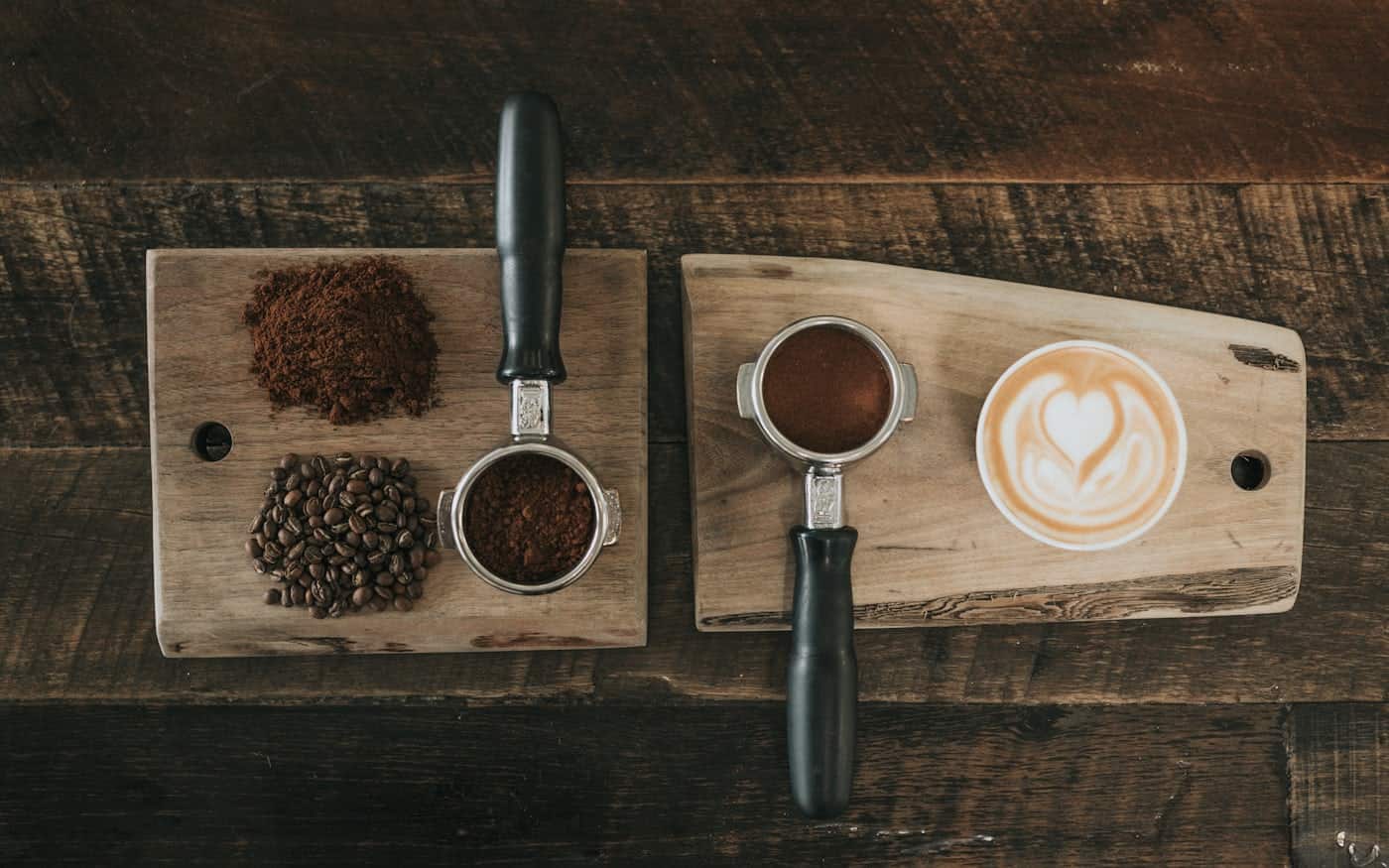
The middle of the chart is where most home brewing lives. Standard automatic drip and flat-bottom drippers like the Kalita Wave want a medium grind, close to table salt, which matches their two-to-four-minute brew. The Chemex, with its thick bonded filter that slows the flow, runs a touch coarser than that, while the cone-shaped V60 drains fast and wants a medium-fine grind to add back the resistance the cone gives away. A useful tell while you brew pour-over: if a V60 drains in under two minutes the grind is too coarse, and if the water pools on top and stalls past three minutes it is too fine. Our dripper head-to-head covers how those three filters change the cup, and the full method overview ranks them by effort.
The fine end of the chart is about pressure and speed. Espresso forces water through a compacted bed of coffee at roughly nine bars in about 25 to 30 seconds, so it needs a fine grind, close to powdered sugar, to create the resistance that pressure pushes against. A Moka pot sits just a hair coarser than espresso: it builds far less pressure on the stovetop, so a grind as fine as true espresso can choke it, but it still runs much finer than drip. Turkish coffee is the finest grind of all, a flour-like powder that stays suspended in the cup because it is never filtered out. Espresso is also the least forgiving setting on the chart. A grind change too small to matter anywhere else can swing the shot from sour to bitter, which is the whole reason a stepless or fine-stepped grinder matters more for espresso than for any other method.
Here is the part the chart hides: the grind size you dial in is only as good as the grinder holding it. A blade grinder chops beans into a chaos of boulders and dust at the same time, so even when the average looks right, the dust over-extracts into bitterness while the boulders under-extract into sourness in the same cup. Those tiny dust particles have a name, fines, and too many of them muddy every method. A burr grinder crushes beans between two abrasive surfaces set a fixed distance apart, so it produces particles that cluster tightly around your target size. That is why a consistent grind, not just the right average, is what actually gets you an even extraction. If you are choosing one, our guide to the best coffee grinder for home walks through what to look for.
Two more things shift where you land on the chart. The first is grind uniformity over grind number: the dial marking on a grinder is relative to that machine, so "12 clicks" on one grinder is not the same as another, and the texture comparisons in this chart travel better than any number. The second is that grind is one lever among three. It works alongside your brew ratio and your water, and you adjust grind first because it has the biggest effect on extraction speed. For the ratio side of that, see our coffee-to-water ratio guide, and for the technique that ties grind, ratio, and pour together, our guide to dialing in pour-over puts the whole loop in order.
Once you can match a grind to a method, the rest is dialing in. If your cup leans sharp and sour, grind finer or slow the brew; if it leans harsh and bitter, grind coarser or shorten it, and change one thing at a time so you can hear what each move does. The beans matter too: ask any specialty coffee shop in Brooklyn to grind to order for your method, or better, buy whole bean and grind fresh at home. When you are ready to set up your own station, the grinders, kettles, and brewers we point people to live on the gear page.
Frequently asked
- What grind size should I use for a French press?
- Use a coarse grind, close to the texture of sea salt or coarse breadcrumbs. The metal mesh filter lets fine particles through, so a coarse grind keeps the last sip from turning sludgy and slows over-extraction during the four-minute steep.
- Why does espresso need such a fine grind?
- Espresso forces water through a compacted puck at about nine bars of pressure in roughly 25 to 30 seconds. A fine grind, close to powdered sugar, creates the resistance that pressure needs. Grind too coarse and the water rushes through sour and thin.
- Can I use one grind size for every brewing method?
- No. Each method is built around a different contact time and filter. A coarse grind that works for a French press will run weak and sour through an espresso machine, and an espresso grind will clog a pour-over and turn it bitter. Match the grind to the method.
- Does grind size matter more than the grinder itself?
- They work together. A consistent grind size matters, but a blade grinder cannot deliver one; it chops beans into a mix of boulders and dust. A burr grinder produces even particles at a chosen setting, which is why grind size and grinder choice are part of the same decision.
Worth a visit
Coffee shops that fit this story.