July 2, 20266 min read
Home Espresso Starter Bundle: The Full Kit
Build a home espresso starter kit that works together: a compact machine, an espresso grinder, a calibrated tamper, and a scale, with verified prices.

A home espresso starter bundle is four pieces that have to work together: a compact machine, an espresso grinder, a tamper sized to the basket, and a scale with a timer. The set we build around most beginner kitchens pairs the Breville Bambino Plus with the Baratza Encore ESP grinder, a 53 to 54mm calibrated tamper, and a small scale, and it runs roughly $700 to $850 at street prices. The single rule that saves people the most regret: the grinder matters as much as the machine, and it is the part most new buyers skip.
Here is how we built the bundle. We anchored everything to one machine so the parts fit each other without a research project. The Bambino Plus uses a 54mm portafilter, which sets the tamper size, and it pairs with an espresso grinder that adjusts in small steps through the espresso range. We did not chase the cheapest version of each item in isolation, because four mismatched bargains cost more grief than one coordinated kit. If you are weighing the machine choice on its own, our guide to the best espresso machine for small apartments covers the footprint tradeoffs in a tight kitchen.
How we picked
How we pick. We do not run a lab, and we do not claim hands-on bench testing of every item in this kit. We build the bundle around one machine so the four parts fit together, then we synthesize the people who test at length, James Hoffmann, Wirecutter, and Serious Eats, against the manufacturer specs and what Brooklyn shops actually run on their bars. Prices are street ranges we verified at publication and will drift, so treat them as a budgeting guide, not a quote. Where we could not verify a figure, we left it out.
Our picks
Breville Bambino Plus
A compact single-boiler machine under 8 inches wide with an automatic steam wand, so a small kitchen does not need a separate frother.
Strengths 7.7 inches wide · ThermoJet heats to extraction temperature in about 3 seconds · automatic milk steam wand
Watch-outs ships with a pressurized basket that masks grind problems · small boiler steams a single drink at a time
Baratza Encore ESP
An entry electric espresso grinder with 40mm conical burrs and stepped adjustment fine enough to dial an espresso shot, plus settings for filter coffee.
Strengths 40mm conical burrs · 40 stepped settings, 20 of them in the espresso range · includes a dosing cup for 54mm baskets
Watch-outs stepped, not stepless, so the finest espresso tuning is coarse · about as much as the machine, which surprises first-time buyers
Normcore 53.3mm spring-loaded tamper
A calibrated tamper sized for the 54mm Breville basket. The spring clicks at a set pressure, so every tamp is the same and one variable leaves the equation.
Strengths fits the 54mm Breville portafilter · calibrated spring for repeatable pressure · flat stainless base
Watch-outs sized to one basket, not a universal fit
Timemore Black Mirror Basic+
A small scale with 0.1 gram precision and a built-in timer that fits on the drip tray, so you weigh the dose in and the shot out.
Strengths 0.1 gram precision · built-in timer · compact enough to sit under the portafilter
Watch-outs tight fit under some machines, measure your drip tray clearance
Start with the machine, because it sets the size of everything else. The Breville Bambino Plus is one of the smallest machines that still steams milk on its own, at 7.7 inches wide, and Breville rates its ThermoJet system to reach extraction temperature in about three seconds. It pulls shots through a 54mm portafilter and steams a flat white without a second device. The honest catch is the basket it ships with: a pressurized dual-wall basket that produces fake crema and hides grind problems. You swap to the single-wall basket and lean on a real grinder to taste what you paid for. That is the whole reason the grinder is in this bundle and not an afterthought.
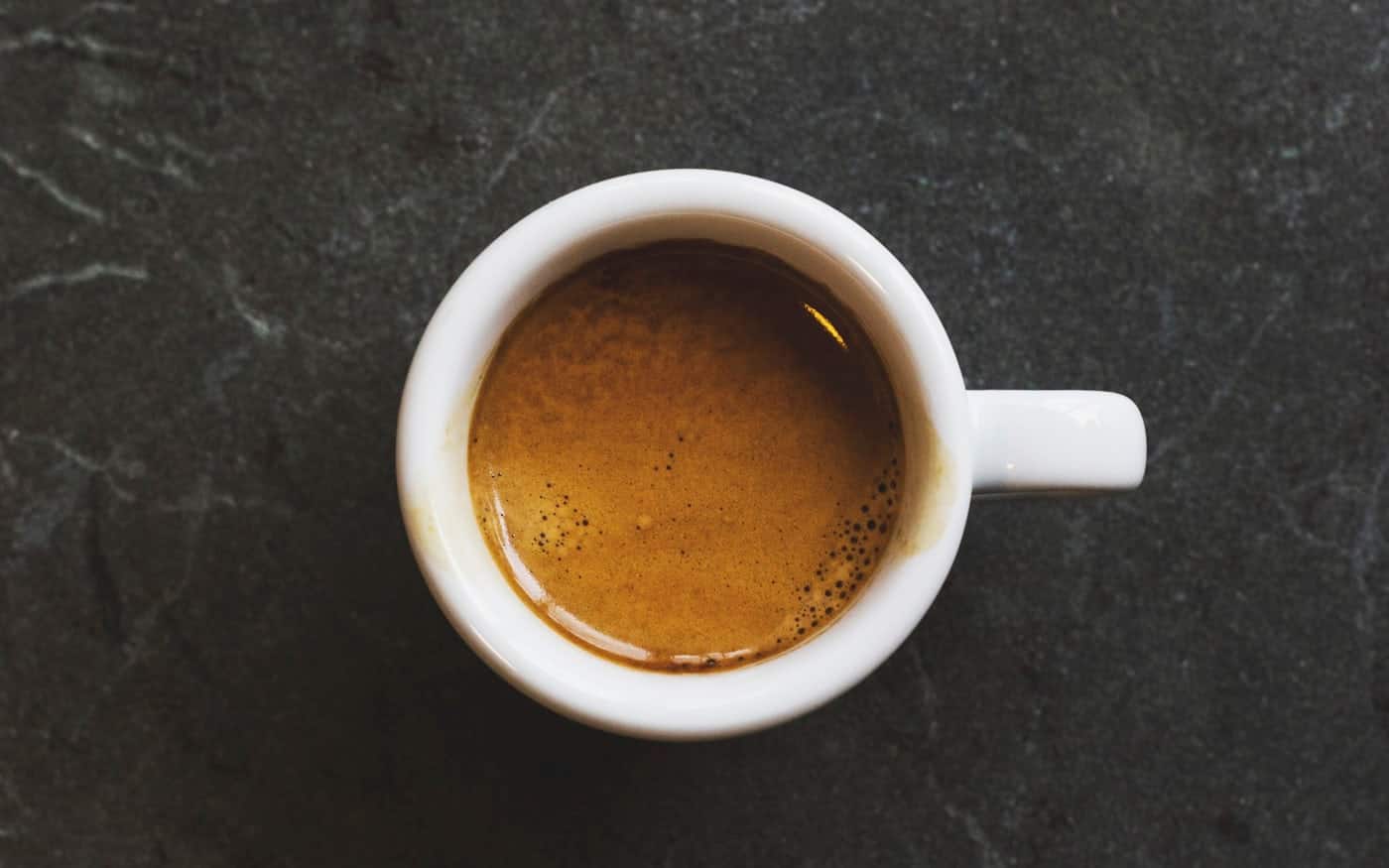
The grinder is where beginners go wrong, so it gets equal billing. The Baratza Encore ESP is an entry electric espresso grinder with 40mm conical burrs and 40 stepped settings, 20 of which sit in the espresso range for the small adjustments a shot needs. It also includes a dosing cup sized for 54mm baskets, which is one less thing to source. Espresso lives in a narrow band: a hair too coarse and the shot runs fast and sour, a hair too fine and it chokes and turns bitter. A burr grinder that steps finely is what lets you find that band and return to it. The honest tradeoff is that it is stepped rather than stepless, so the very finest tuning is coarser than on a pricier grinder, and it costs about as much as the machine. That last fact is exactly the surprise this guide exists to prevent. If you want the wider grinder field on a tighter budget, our shortlist of the best burr grinders under $100 is the place to start, though most of those are tuned for filter rather than espresso.
The tamper and the scale are the cheap half of the kit, and they are what turn random shots into repeatable ones. A calibrated tamper like the Normcore 53.3mm clicks at a set pressure, so you tamp the same way every time and remove one variable from the shot. It is sized for the 54mm Breville basket, which is the one place sizing matters: a 58mm tamper will not fit. The scale closes the loop. A small scale with a timer and 0.1 gram precision, like the Timemore Black Mirror Basic+, lets you weigh the dose going in and the shot coming out, which is how you hold a brew ratio steady from cup to cup. If you brew filter coffee too, that same scale earns its keep there, and our guide to the best coffee scales with a timer covers the other options.
How to choose if the budget is tight. Spend first on the grinder and the machine, in that order of importance even though the machine sets the size. A great machine fed a bad grind makes a bad shot, and a modest machine fed a good grind makes a good one. The tamper and the scale are small money, so do not skip them to save thirty dollars. If the full kit is out of reach this month, our guide to the best home coffee setup by budget lays out what to buy first at $75, $200, and $500, and where espresso fits next to a simpler pour-over kit. You can also see the full list of what we recommend on the gear page.
A few use-case cuts. If you drink milk drinks every morning, the Bambino's automatic wand is the piece you will be glad you bought, and the bundle needs nothing extra. If you mostly pull straight shots, you could spend less on a machine without a steam wand and put the savings into the grinder. If counter space is the hard constraint, read the small-apartment guide before committing, because a manual lever maker swaps the steam wand for a setup that stores in a drawer. Whichever way you go, the grinder, tamper, and scale carry over, so the bundle's cheap half is a safe first purchase even before you settle on the machine.
Once the kit is on the counter, the work moves from buying to dialing in, and that is its own skill. Grind size is the lever you will touch most: a small turn finer slows the shot and pulls more out of the coffee, a small turn coarser speeds it up. Our grind size chart by brewing method gives you a starting point, and when a shot comes out harsh or thin, our notes on why coffee tastes bitter or sour point you at the one variable to change. The scale and the calibrated tamper are what make that troubleshooting possible, because they hold everything else still while you move one thing.
The Brooklyn reason to build this at home is simple: a dialed setup is the only thing that beats walking to a great bar, and the bar sets the standard you are chasing. You can taste what espresso is supposed to be at the borough's specialty coffee shops before you spend on hardware, and the beans you bring home deserve the kit. Pick up a bag from a roaster like Sey Coffee in Bushwick, grind it fresh, and the difference between a good shop and your kitchen narrows fast. Buy the machine and the grinder together, add the cheap half, and you have the whole habit on one counter.
Frequently asked
- What do you need for a home espresso starter kit?
- Four things that work together: a compact espresso machine, an espresso grinder that adjusts fine enough to dial a shot, a tamper sized to your basket, and a scale with a timer. The machine and the grinder do almost all of the work in the cup. The tamper and scale are cheap, and they are what make your shots repeatable instead of random.
- How much does a beginner home espresso setup cost?
- A coordinated starter bundle runs roughly $700 to $850 at street prices: about $400 to $500 for a compact machine like the Breville Bambino Plus, around $200 for an espresso grinder like the Baratza Encore ESP, $40 to $55 for a calibrated tamper, and around $60 for a scale with a timer. The grinder is the part most beginners underbudget.
- Do you really need a separate grinder for espresso?
- Yes, in almost every case. Espresso needs a fine, even grind that adjusts in tiny steps, and a blade grinder cannot hold that. A pressurized basket can fake the look of a good shot for a while, but to taste what the machine can do you need a grinder that steps finely through the espresso range. Budget for it from the start.
- Does the gear need to match sizes to work together?
- The tamper does. Tamp diameter has to match your portafilter basket, so a Breville machine with a 54mm basket wants a 53 to 54mm tamper, not a 58mm one. The grinder and scale are size-agnostic. Buying a bundle anchored to one machine, the way we do here, takes the guesswork out of matching the tamper.
Worth a visit
Coffee shops that fit this story.