July 3, 20263 min read
Is Specialty Coffee Worth the Price? A Brooklyn Gut-Check
What the extra dollar at a Brooklyn independent actually buys, when specialty coffee is worth it, and an honest test for whether it is worth it to you.

Here is the honest version, right at the top. Specialty coffee is worth it when you can taste the difference and you value the room you are sitting in. It is not worth it when you drink it on autopilot from a commuter cup and could not pick it out of a lineup. The price gap between a Brooklyn independent and the chain on the corner is usually a dollar or two, not a fortune, so the real question is not whether you can afford it. It is whether you would notice.
Start with what that extra dollar actually buys, because it is not nothing and it is not magic either. You are paying for beans with a real roast date instead of a sack that has been open for a month, a grinder set fresh that morning, and someone behind the bar trained to taste a shot and fix it when it drifts. You are also paying for transparency: a good shop can tell you where the coffee came from, which is the whole story we chased in where Brooklyn's roasters source their beans. None of that shows up in a photo of the cup, but it shows up in the cup.
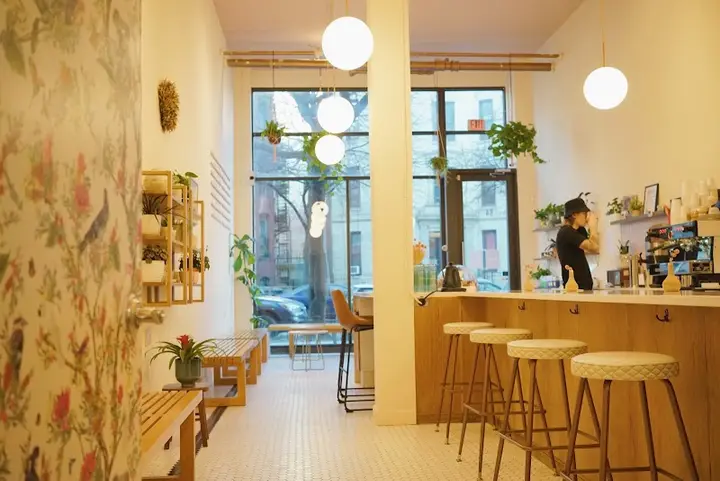
It helps to separate the bean from the building. Part of the price is the coffee, and part of it is the chair you get to sit in for an hour without anyone rushing you. A careful tasting counter like Sit & Wonder in Prospect Heights or a roaster-cafe like Devoción is selling an afternoon, not just a drink. If that is not what you came for, you are paying for square footage you do not want, and the chain is the rational choice. That is a fair trade to name out loud.
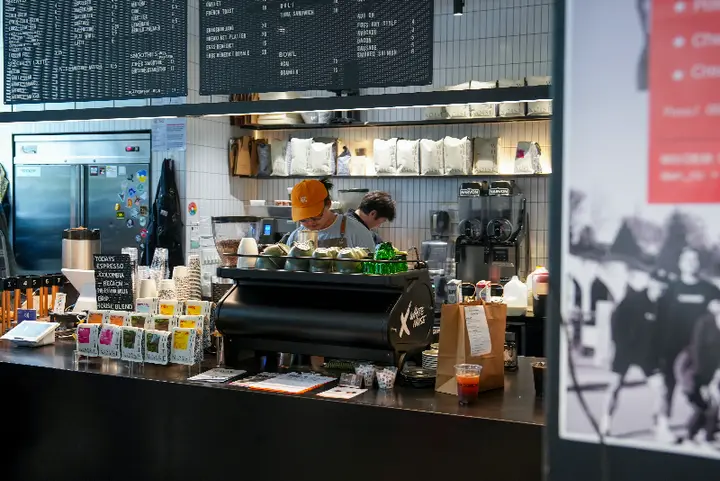
So when is it honestly not worth it? Be a skeptic here, because pretending every cup is transcendent is how coffee writing loses its credibility. If you are grabbing something on a packed train platform, if you take it light and sweet enough that the espresso is a rumor, or if you genuinely cannot taste the gap after an honest try, then the premium is just money. There is no shame in that. The point of paying attention is to spend on what you actually notice and skip what you do not.
If you want to settle it for yourself, run a cheap experiment. Order the same drink, a cortado or a plain drip, at a chain and at one independent in the same week, ideally a roaster-cafe like Kos Kaffe or any of the counters in our roundup of shops with a serious espresso program. Drink them black, or close to it, and see whether one tastes like roasted fruit and the other tastes like roasted toast. Most people can tell. If you cannot, you have just saved yourself a standing expense, and that is a real result too.
The Brooklyn context is worth understanding before you decide the price is greed. Independents here pay borough rent, roast in small batches, and actually pay their baristas, so a cup that costs a little more is usually priced fairly rather than padded. If the menu ever feels like a foreign language, our guide to ordering coffee in Brooklyn takes the intimidation out, and if you want a shop-by-shop case for drinking local, we made it in chain versus independent coffee.
Where does that leave the six-dollar latte everyone likes to complain about? Worth it if you slow down enough to taste it and you like where you are drinking it. Not worth it if it is just fuel. The good news is that Brooklyn makes the test easy, because the better cup is rarely more than a block away. When you want the full field rather than one comparison, the Connoisseur lane is where to start.
Worth a visit
Coffee shops that fit this story.