April 12, 20264 min read
The Rise of Yemeni Coffee Houses in Brooklyn
Yemeni coffee houses are reshaping Brooklyn nightlife: late hours, no alcohol, and a centuries-old coffee tradition meeting a new generation of New Yorkers.

Coffee, as a global beverage, traces back to Yemen. Beans first crossed the Red Sea from Ethiopia and were cultivated commercially in the Yemeni highlands, and the port of Mokha gave the world a name it still uses for chocolate-tinged espresso drinks centuries later. That history is a useful frame for what is happening in Brooklyn right now. A small but growing cluster of Yemeni-owned coffee houses has opened across the borough in the last several years, and they are doing something the rest of the specialty scene mostly does not: staying open late, refusing alcohol, and treating coffee as a centerpiece of a sit-down social evening rather than a morning utility.
The anchor is Qahwah House on Bedford Avenue, which opened at the corner of N 8th Street in November 2020. Founder Ibrahim Alhasbani, who immigrated from Yemen in 2011, comes from an eighth-generation coffee-farming family, and the menu reflects that lineage. The Sana'ani is a medium roast brewed with cardamom. The qishr is brewed not from beans at all but from coffee husks, blended with ginger and cardamom, a preparation that predates the modern espresso machine by several hundred years. The shop runs until 11pm most nights, which is later than nearly every specialty cafe in Williamsburg.
Why now. CNN's 2024 reporting on the trend framed it bluntly: younger New Yorkers, and in particular Muslim and Middle Eastern New Yorkers, want a third place that isn't a bar. Yemeni coffee houses fit precisely into that gap. The drinks are stimulating rather than sedating, the rooms are loud and social rather than library-quiet, and the late hours mean the room actually fills up after dinner instead of emptying out at 4pm the way most of our late-night coffee picks do. That combination, cultural specificity, no alcohol, communal hours, is the engine of the whole phenomenon.
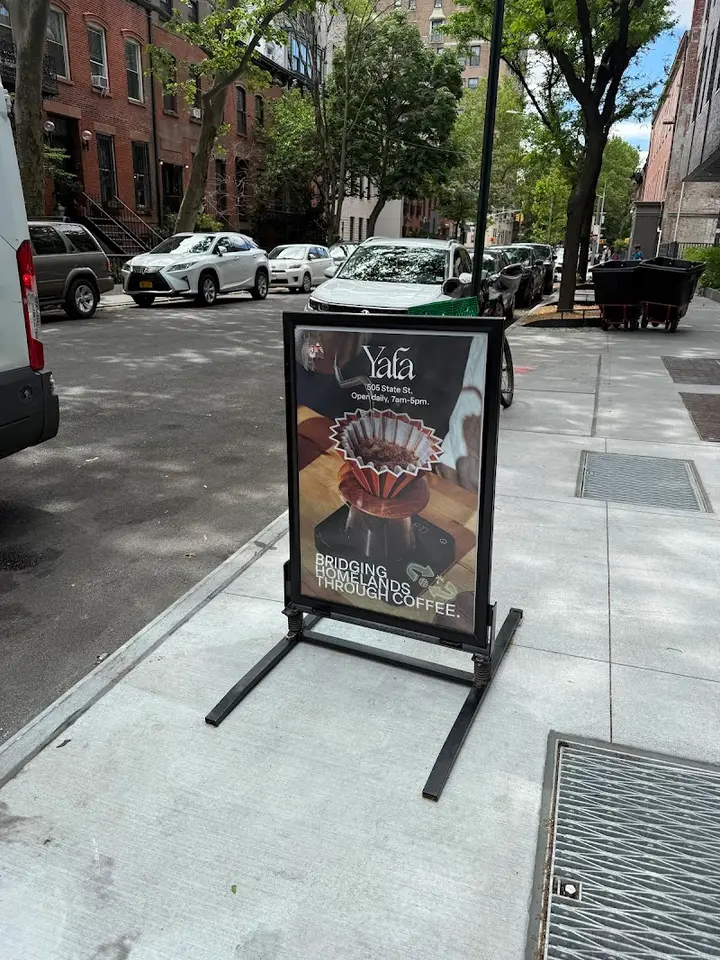
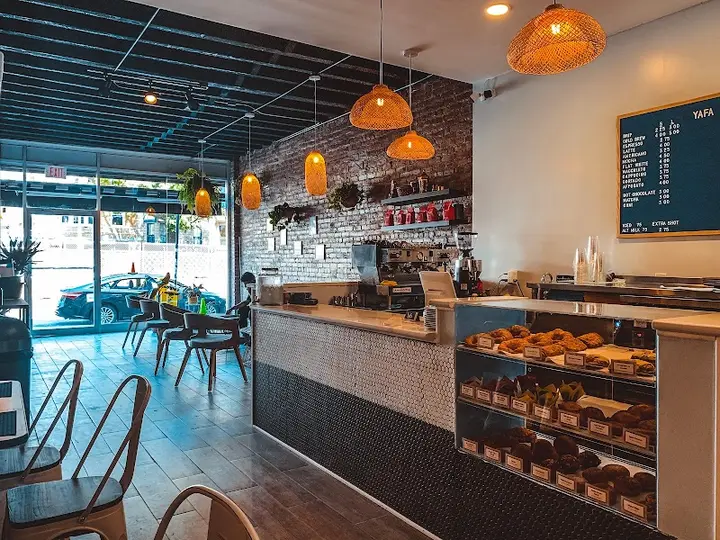
In Bed-Stuy, MoCo 575 has staked out 531 Nostrand Avenue with a Yemeni-rooted program, the shop's own framing ties the name to the early history of coffee in Yemen, and a crepe menu alongside the espresso bar. Further south in Sunset Park, Yafa Brooklyn has been operating as a small-batch Yemeni roaster and cafe at 4415 4th Avenue since 2019. Yafa is the most roaster-forward of the bunch, with a Mokha lot from Yemen sitting on the menu alongside house blends, and the room itself is set up for the kind of long stays you usually have to leave Brooklyn to find.
Bay Ridge is doing real work here too, even though it sits outside our current coverage map. Bilqis Coffee opened on 5th Avenue in January 2025, sourcing pour-overs directly from women growers in Yemen's East and West Haraz regions and decorating the room with artwork tied to Yemeni coffee heritage. Asal Yemen, also on Bay Ridge's 5th Avenue, leans into the coffee-and-honey pairing the country is known for, with specialty lattes and several varieties of Yemeni honey on hand. Both are halal, both stay open into the evening, and both treat coffee as a sit-and-stay ritual rather than a transaction.
It is worth being precise about what makes the coffee itself distinctive, because the marketing language can flatten it. Yemeni Arabica tends to be processed naturally, fruit dried on the bean, and the resulting cups often read as wine-like and complex, with low acidity and notes that range from dried fruit to dark chocolate depending on the lot. The roasts skew lighter than what most New Yorkers associate with Middle Eastern coffee culture, which historically has been about preparation (cardamom, ginger, husk infusions) more than about dark roast intensity. If you want a useful comparison point inside our catalog, the natural-process work coming out of Sey Coffee in Bushwick is the closest aesthetic neighbor on the lighter, fruit-forward end. The Bushwick coffee guide covers that scene in more depth. The direct-from-origin model has a different kind of analog at Devoción, which airfreights Colombian beans rather than Yemeni ones but operates on the same I-know-the-farm logic.
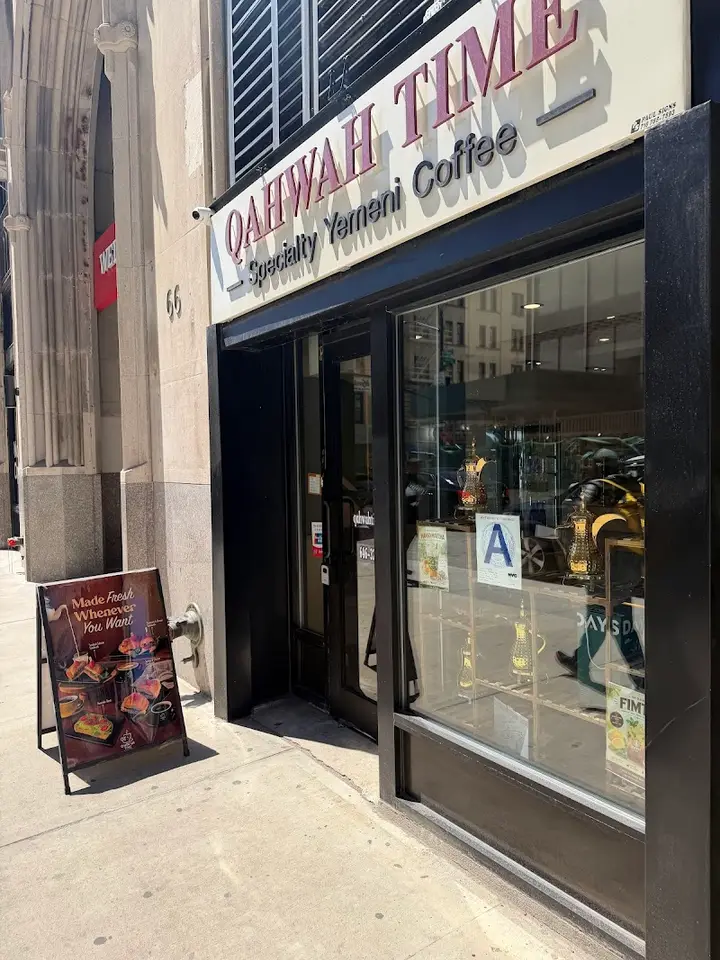
Some caveats worth keeping. The trend is real, but the headlines have run ahead of the on-the-ground footprint in Brooklyn specifically. Haraz Coffee House, which is the chain most often namechecked in national coverage, has NYC locations in SoHo and Astoria but no Brooklyn storefront as of this writing. Several other names that circulate in trend pieces, Matari, Qahwah Time, BonTree, are not yet reliably mapped to Brooklyn addresses either. The borough version of this story is, for now, a handful of distinctive shops doing serious work rather than a saturated category, and that is worth saying clearly. There is also a parallel current of Levantine-leaning rooms in Brooklyn, the all-day Café Alula in Greenpoint is the most prominent, that share some of the cultural texture without being Yemeni specifically.
If you are putting together a night to actually try this, the simplest itinerary is Qahwah House for the Sana'ani and a pot of qishr, then walk Bedford after sunset when the room is at its loudest. If you want the roaster experience, take the train to Yafa in Sunset Park during daytime hours and ask what Yemeni lot is currently on the bar. For everything else in the borough, our full Brooklyn coffee directory is the place to start.
Frequently asked
- Where can I find Yemeni coffee houses in Brooklyn?
- The clearest places to start are Qahwah House on Bedford Avenue in Williamsburg, MoCo 575 at 531 Nostrand Avenue in Bed-Stuy, and Yafa Brooklyn at 4415 4th Avenue in Sunset Park. Qahwah House opened at the corner of N 8th Street in November 2020, while Yafa has run as a small-batch Yemeni roaster and cafe since 2019. The borough version of this trend is still a handful of distinctive shops rather than a saturated category.
- What is qishr coffee?
- Qishr is a traditional Yemeni preparation brewed not from beans at all but from coffee husks, blended with ginger and cardamom. It predates the modern espresso machine by several hundred years, and you can order a pot of it alongside the cardamom-brewed Sana'ani medium roast at Qahwah House in Williamsburg.
- Why are Yemeni coffee houses open so late?
- Yemeni coffee houses stay open late because they are built as a non-alcoholic third place where coffee anchors a sit-down social evening rather than a morning errand. Qahwah House runs until 11pm most nights, later than nearly every specialty cafe in Williamsburg, and the rooms fill up after dinner instead of emptying out at 4pm the way most late-night picks do. The drinks are stimulating rather than sedating, and the rooms are loud and social rather than library-quiet.
Worth a visit
Coffee shops that fit this story.