May 6, 20265 min read
Brooklyn Coffee Shop Etiquette: Tipping, Table-Holding, and Mobile Orders
A clear-eyed guide to Brooklyn coffee shop etiquette: tipping, holding a table, mobile orders, length of stay, phone calls, and being a good regular.

Cafes are businesses. That sounds obvious until you watch a four-person group hold a six-top for three hours on one drip coffee, or someone take a Zoom call at full volume next to the espresso machine. The norms exist because they have to, a small room, a small staff, and high order turnover leaves no slack. This is not meant to scold anyone. It is the unwritten code most regulars already follow, written down.
Tipping first, because it is the most contested. The cafe tipping experience is mostly the Square screen flip, a tablet swiveled toward you with preset options, usually between fifteen and twenty-five percent. There is no consensus on the right answer, and you should not feel cornered by the screen. A useful frame: if a barista pulled an espresso, steamed milk, did latte art, and handled the transaction, that is service work, and a dollar or two on a single drink is the floor most regulars settle into. For a counter where someone handed you a drip coffee in a paper cup, the tip jar is the older, looser convention, a coin or a dollar, no judgment if you do not. Full-service cafes with table delivery are closer to restaurant math, around twenty percent. The pre-tax versus post-tax debate is real and unresolvable: some people tip on the subtotal, some on the total, both are defensible. Tip what feels fair for the labor in front of you and move on.
Table-holding is the Brooklyn move that confuses out-of-towners. The norm: if a cafe is busy and you are with someone, one person grabs a table while the other orders. This is fine, even encouraged, because the alternative, both of you standing at the counter then racing to a table, is worse for everyone behind you. Solo is different. If you are alone, order first, then sit. Putting your bag and laptop on a table while you wait alone in line at a packed cafe earns side-eye, and it should. The bathroom question is its own thing: leaving a laptop on a table for a two-minute bathroom run at a quiet cafe is normal, leaving it for fifteen minutes while you take a phone call outside is not. The implicit rule is that the table belongs to a paying customer who is actually there.
Mobile order has changed how a counter feels. At cafes that take app orders, half the queue is invisible, drinks lining up on the pickup shelf for people who never spoke to a barista. If you ordered ahead, stand off to the side near the pickup area, not in the in-person line. Give it a few minutes; specialty drinks take real time, and the staff is working a queue you cannot see. If your order does not appear after a long while, a quiet check-in is fine. Do not interrupt the barista mid-shot pull, and do not assume they forgot. The flip side: if you are ordering in person at a cafe with mobile pickup, do not stand directly in front of the pickup shelf. Other people are trying to grab their drinks and leave.
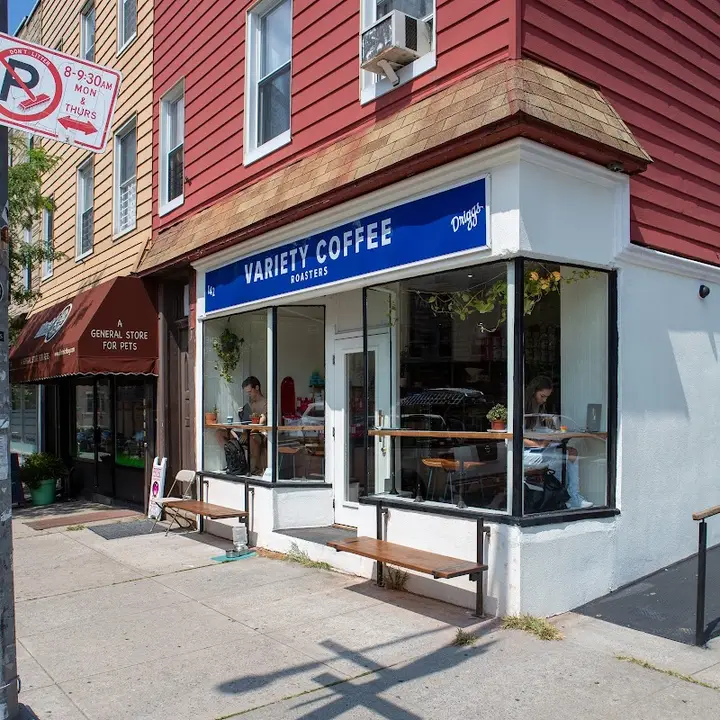
Length of stay is where Brooklyn diverges from most cafe-etiquette guides. Long laptop sessions are normal here, especially at the cafes built for them. The implicit rule most regulars follow: one drink buys you roughly ninety minutes. If you stay longer, buy something else, a refill, a pastry, a second coffee in the afternoon. The vibe varies by shop. A small corner cafe with eight seats and a line out the door is not the place for a four-hour work session; Cafe Grumpy in Greenpoint is busy enough that turnover matters. A larger laptop-friendly room is the opposite. Places like Variety Coffee Roasters, Postmark Cafe, and Devoción are built around outlets, big tables, and the assumption that people stay. For the full set, the laptop-friendly coffee shops list is the lane to start with.
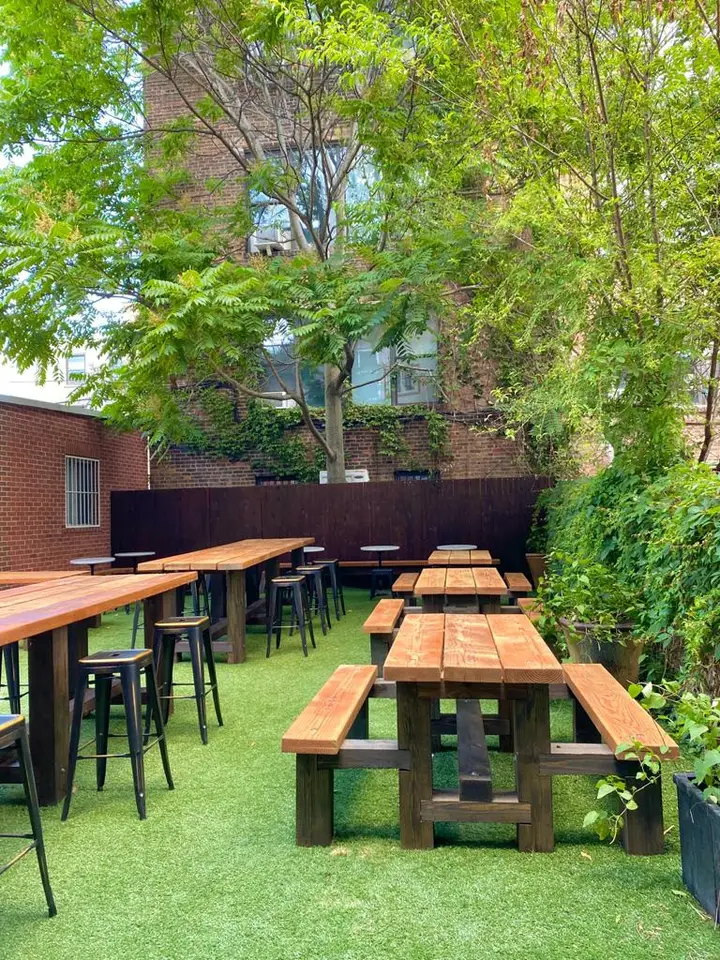
Phone calls and Zooms are the most-asked-about etiquette point, and the answer is simple: nobody else wants to hear your meeting. A cafe is a shared room, and the audio you generate is a tax on everyone within ten feet of you. Take the call outside or save it for a desk. Headphones do not help. Your half is still loud. Some larger cafes have back patios where calls are tolerated; most do not. The default is to step out.
On dogs, kids, and groups: ask before you assume. Plenty of Brooklyn cafes welcome dogs in their outdoor seating and a smaller number allow them inside; look for a sign or ask the barista, do not walk in with a leash and find out the hard way. The dog-friendly coffee shops post has the longer patio map. Pup cups are a courtesy, not a guarantee. Tip extra if you ask for one. Kids are welcome at most cafes during the day, especially the food-led ones, but a stroller blocking a narrow aisle at peak hour is a real problem. Groups of more than four should call ahead at a small cafe or pick a room sized for it; those rooms tend to overlap with the food-led cafes covered in the brunch coffee shops post.
The unifying principle is that the staff is moving fast and their time is the scarce resource. Order with your card out. Know what you want before you reach the register. If a drink takes a few minutes, it is because someone is making it by hand. Tip when you can, hold a table only when it makes sense, take your call outside, and buy a second coffee if you are still there at hour two. The reward every cafe regular eventually figures out: once the staff knows your face and your order, the whole experience gets easier, faster, and quieter. For the full picture of where to practice, the complete shop directory covers the borough.
Frequently asked
- How long can you stay at a Brooklyn coffee shop with one drink?
- The implicit rule most regulars follow is that one drink buys you roughly ninety minutes, and if you stay longer you buy something else, a refill, a pastry, or a second coffee. The vibe varies by shop: a small corner cafe with eight seats and a line out the door, like Cafe Grumpy in Greenpoint, is not the place for a four-hour work session, while larger laptop-friendly rooms like Variety Coffee Roasters, Postmark Cafe, and Devoción are built around outlets, big tables, and the assumption that people stay.
- How much should you tip at a Brooklyn coffee shop?
- Tip what feels fair for the labor in front of you: a dollar or two on a single drink is the floor most regulars settle into when a barista pulls espresso, steams milk, and handles the transaction. For a counter that just hands you a drip coffee in a paper cup, the tip jar is a looser convention of a coin or a dollar with no judgment, and full-service cafes with table delivery are closer to restaurant math at around twenty percent. The Square screen usually presets fifteen to twenty-five percent, but you should not feel cornered by it.
- Is it okay to take a phone call or Zoom in a Brooklyn cafe?
- No, the default is to step outside, because nobody else wants to hear your meeting and a cafe is a shared room. Headphones do not help since your half is still loud, so take the call outside or save it for a desk. Some larger cafes have back patios where calls are tolerated, but most do not.
Worth a visit
Coffee shops that fit this story.